Example 1: Explaining the Chemistry
Question 1
The diagram shows some important conversion processes used in the oil industry.
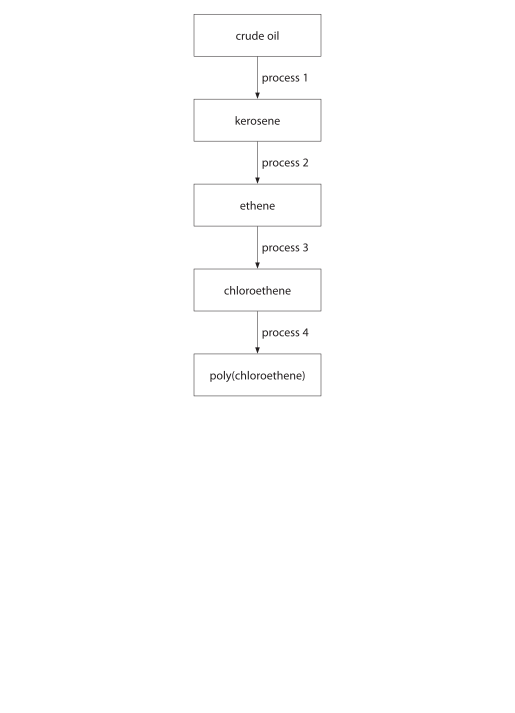
Explain why the disposal of polymers such as poly(chloroethene) is difficult.
Final answer
- They are inert / unreactive, so they are non-biodegradable and do not naturally break down.
- Or: when polymers such as poly(chloroethene) are burned, they produce toxic fumes.
Mark scheme points
- M1 State that the polymer is inert / unreactive.
- M2 Link this to the polymer being non-biodegradable / not naturally breaking down / taking a long time to break down.
- M3 Alternative route: state that the polymer is burned.
- M4 Link burning to the production of toxic fumes.
Explanation
There are two ways to score full marks here, and either one is enough.
- One route is to explain that these polymers are inert / unreactive. Because of this, they are non-biodegradable and do not naturally break down. This is why disposal in landfill is difficult.
- The other route is to explain that when they are burned, they produce toxic fumes. That makes disposal by incineration difficult.
To secure both marks, make sure you include both parts of one route: the property and the consequence. For example, “they are inert” on its own is not enough, and “they produce toxic fumes” needs to be linked to burning.
If you use the landfill idea, “take a long time to break down” is also acceptable.
Common mistakes
- Writing only “they are inert” without saying they are non-biodegradable or do not break down.
- Writing only “burning is bad” without stating that toxic fumes are produced.
- Talking about recycling or cost of disposal instead of the accepted mark-scheme points.
- Saying the polymer is biodegradable; this is the opposite of the correct idea.
- Examiners reported that a very common full-mark answer was that burning polymers such as poly(chloroethene) produces toxic fumes. That statement was already more than enough for 2 marks.